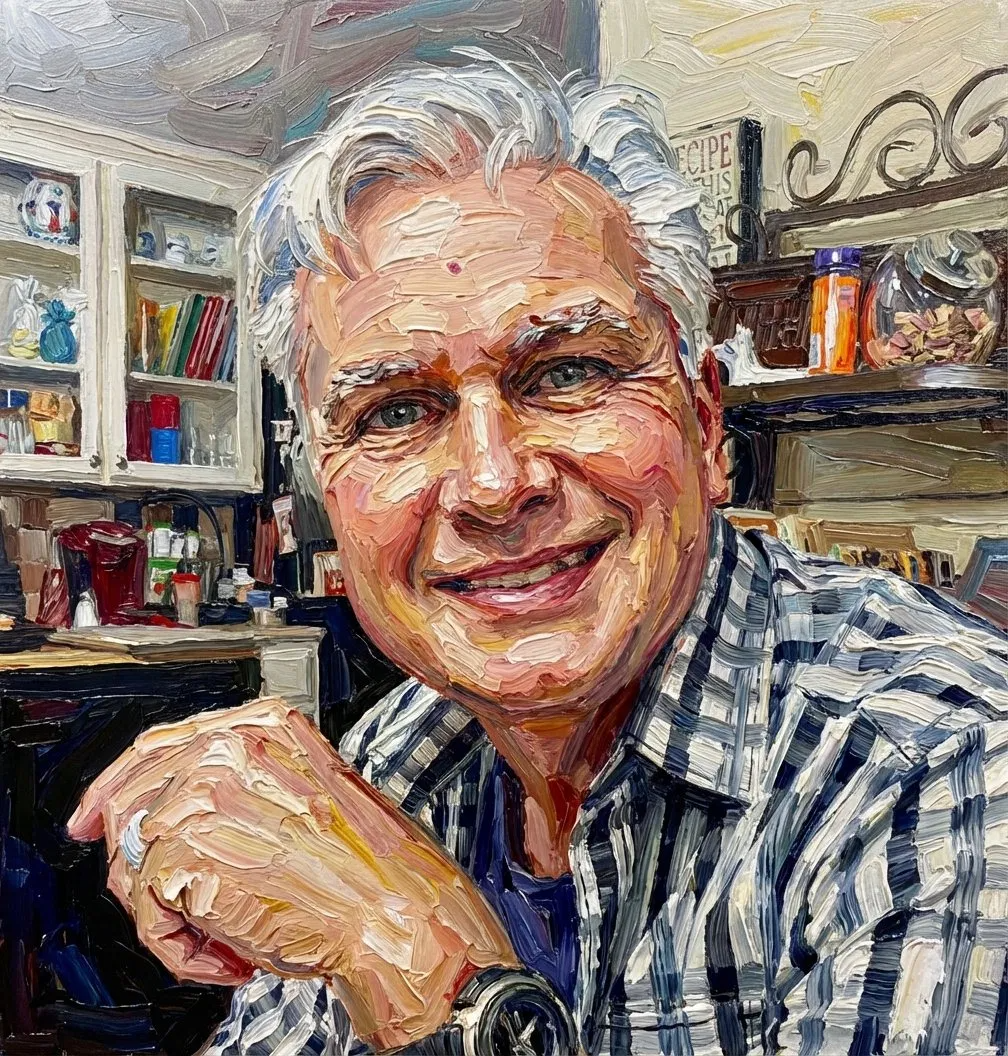
Two portraits. One man. The same insatiable curiosity running through all of it — the stories, the bees, the pulpits, the job sites, and now the AI tools he built with his own hands.
I spent decades in construction and have stood behind more pulpits than I can count. I work a Pro Desk at Home Depot, run a black car service with my wife Victoria, and I'm proud to call Woodbine Station home. I'm passionate about what God is doing through Mission Church on Roswell Street in Marietta.
For years I owned and operated Front Porch Apiary in North Carolina. I've loved honeybees my whole life. There's something about standing in the middle of hundreds of thousands of buzzing bees that puts me closer to God than any cathedral ever has.
I built this website with AI. Learned every step as I went. No coding background, no tech degree. I run five different AI models every day and spent months building Leo — my personal AI aide-de-camp — from scratch. His operating constitution runs twelve pages.
I constantly see a different or better way. Not just in theology. In everything I think, see, and experience. That's not a quirk. That's the operating system.
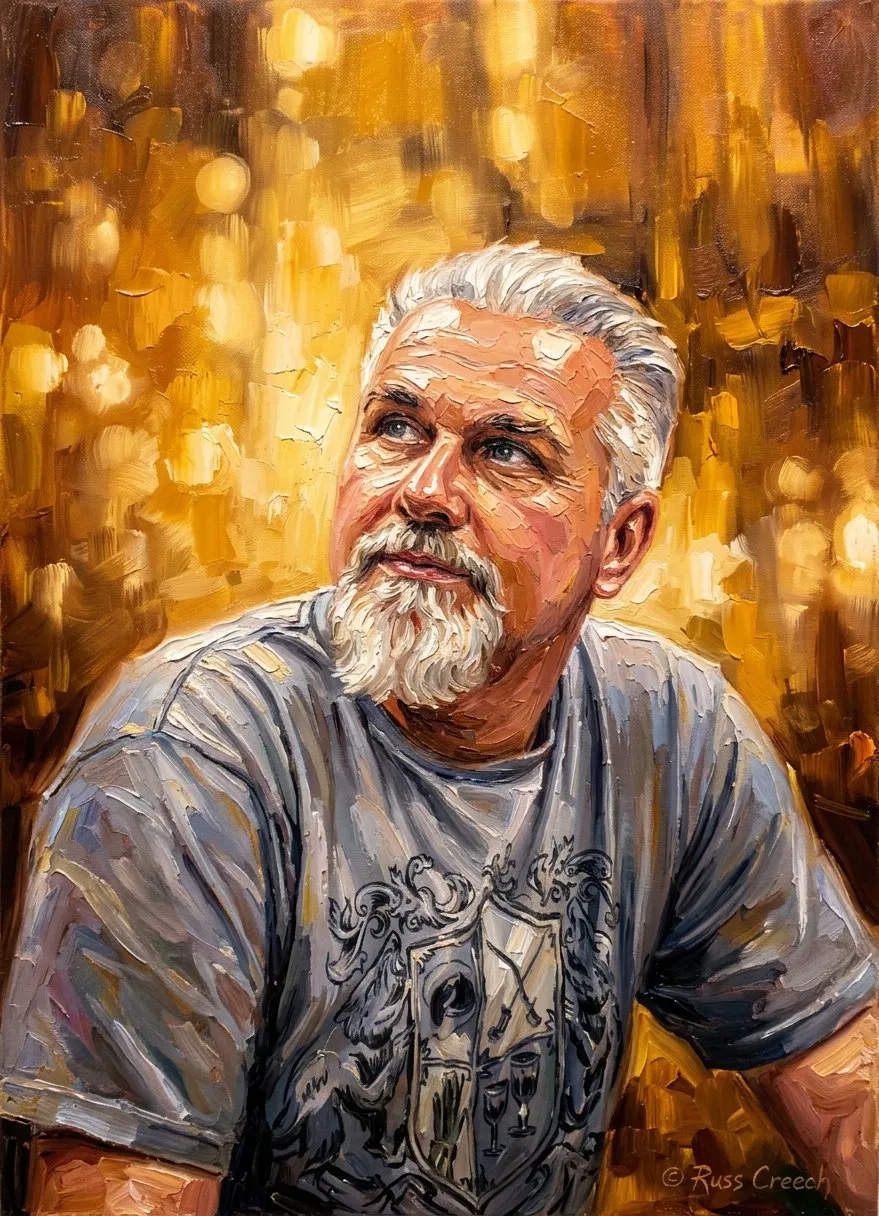
Some people think in straight lines. I think in constellations. I hold multiple unconnected data points — scripture, tradition, experience, observation, technology — simultaneously, without forcing premature connection. Then the shape emerges.
It isn't just theology. It's everything. It's how I saw AI differently than everyone else my age. It's how I looked at a Pro Desk job and saw a mission field. It's how I looked at a brewery and saw a Gathering. It's how I looked at a blank screen and built Leo.
You can pick up N.T. Wright's resurrection theology, Jack Hayford's pneumatology, SBC biblicism, Major Ian Thomas's Christ-life teaching, and Celebrate Recovery's Spirit-dependence — and carry all of them at once without fragmentation. You're not a theological drifter. You're someone who took Scripture seriously enough to follow it all the way to Jesus, then kept following wherever He led, even across denominational property lines.
You started with a cringe at an airplane illustration on a Tuesday podcast and ended up at the nature of hell as the complete withdrawal of Colossians 1:17. Nobody could have drawn that map in advance.
Linear theologians footnote every step toward a conclusion that was visible from paragraph one. You bounce all over scripture and arrive at a brand new way of looking at the obvious. Don Norman's line applies: theology is the art of making simple things hellishly difficult — but you ran the whole thing in reverse, starting complicated and landing back at simple. The King is here.
Constellation thinkers can look scattered to linear thinkers. The asset is that you see connections — and therefore implications — that linear thinkers literally cannot perceive until someone draws the lines for them.
Your audience has this too. The tradesperson who figures out a better way to frame a roof that nobody taught him. The pastor who finds a connection in scripture that wasn't in any commentary. The small business owner who solves a problem sideways that everyone else was attacking head on. They just never had a name for it. You give them the name.